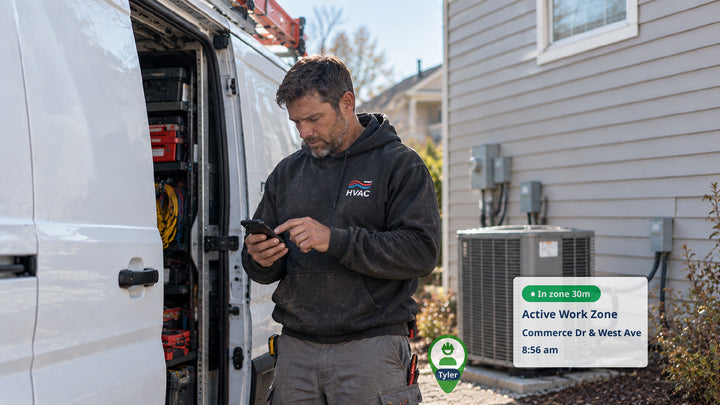


Most fleet telematics deployments start by adding hardware to a vehicle that already contains a powerful sensor platform. The technician is carrying a device with almost identical components: GPS, an accelerometer, a gyroscope, an AI chipset, Bluetooth (BLE), Wi-Fi, and 5G connectivity, and it is already in the vehicle on every trip. Yet the standard telematics and video telematics model bolts on a separate telematics communication gateway and an expensive AI dashcam, adding hardware cost and an embedded cellular plan. Public 2026 pricing puts the current telematics and AI dashcam category at $40 to $60 per vehicle per month with advanced safety enabled, plus $10 to $20 per vehicle in amortized hardware. Meanwhile, the modern workforce is carrying mobile devices that make much of the traditional telematics and dashcam technology redundant. The question worth asking before signing another three-year contract is “Can our mobile devices eliminate redundant costs in our connected vehicle expense?”
What does a modern phone already have on board?
The sensor gap between a purpose-built telematics unit and a current smartphone has effectively closed. A mobile device issued to a field technician in 2026 carries:
- Location Services (GPS) with continuous location awareness whether driving or working on-site, which makes driving-based speed, geofencing, trip start/stop, jobsite arrival detection and route analytics possible.
- Bluetooth and Wi-Fi for automatic connectivity to external IoT devices (dashcams, for example)
- Accelerometer and Gyroscope G-Force analytics that power driving analytics (braking, acceleration, cornering and excessive maneuvers)
- 5G connectivity for ubiquitous data communication and synchronization
- Edge computing and an AI chipset for powerful on-device inference and edge processing
The components above are also the components that are in traditional telematics and dashcam hardware. Whether you purchase hardware or subscribe monthly, you are double-paying for components that are already yours:
- Mobile devices by default contain core telematics vendor components and capabilities
- Components that are extremely expensive for telematics vendors to include in their hardware
- Mobile-device refresh pace outpaces telematics-vendor hardware refresh, resulting in technical obsolescence at install that degrades further during the contract term.
- You end up paying for processing and communication technology that is already in the hands of your employees
Every mobile device makes the most expensive parts of telematics hardware redundant. Every mobile-device refresh makes these components obsolete. Consider the point about Edge-Computing and AI, on-device inference and edge computing means processing data when and where it is generated rather than sending everything to the cloud first. A strategy that current AI video and telematics companies are chasing with new hardware releases. The mobile device your technicians carry already has the complete ability to process and classify all driving events locally, automatically associate event data to the actual driver, act on it immediately, exception-alert in real time, and coach individuals personally in the device-configured end-user language. A simple pairing of the mobile device with an inexpensive dashcam broadens the data, alerts, and coaching.
What can a phone do that dedicated hardware cannot?
This is the part that gets underestimated. It is not just that the phone is already present. It knows things a telematics gateway cannot.
Context. A telematics unit knows the vehicle is moving. A phone knows the vehicle is moving, who is associated with it, whether they are the person assigned to that vehicle, job, or route—and, when the ignition is off and work begins, stays present with the employee. That is location-, motion-, driving-, and work-aware intelligence rather than vehicle-only data and events. Additionally, it is context that allows “do-not-disturb” capabilities to be automatically enforced to protect against device-distracted driving.
Software-refresh. New mobile-device software capability arrives with automatic app updates. When paired with dashcams, this means rapid delivery of new “vision-based AI models” for automatic driver assistance.
Hardware-refresh. Each mobile device refresh leapfrogs the processing power, connectivity, and sensor capability of the previous. A single purpose telematics hardware deployment refreshes at the pace of a hardware installation, reinstallation, refresh rollout schedule – leaving many fleets with legacy telematics and video hardware that is several years old with limited capability.
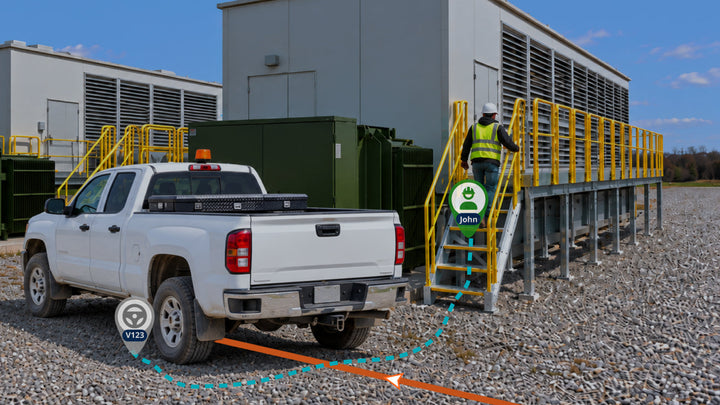
Coverage past the vehicle. Telematics stops contributing the moment the engine stops, but field work happens on a roof, in a crawlspace, at a customer site. A phone travels with the technician, which is what makes workforce management, jobsite visibility, lone-worker check-ins and field escalation possible at all. Mobile technology for mobile workforces is a much better investment than single-purpose, driving-only technology. Given cost, it becomes a poor choice to invest in the vehicle only, when a comparable investment can be made in both driving and working.
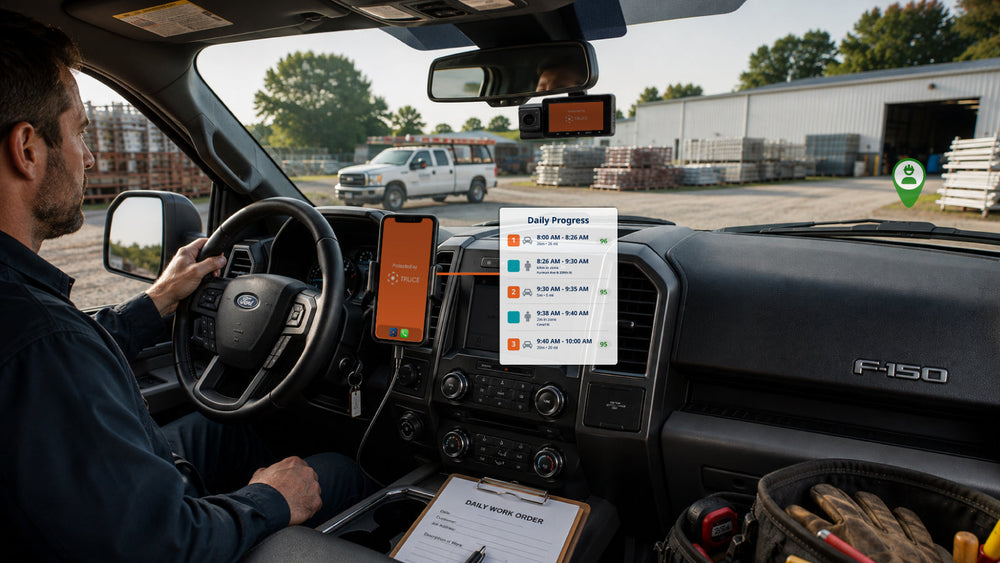
Scale. You cannot coach a vehicle. Building a culture of driving performance and safety that is based on vehicle-hardware sensors requires an administrative step to ensure vehicle to driver assignments are exact – every trip, event, score, coaching plan needs to be individually assigned. Traditional approaches add additional hardware (scanners, key-fobs) and various other schemes to fix this gap. The mobile-device to driver assignment guarantees that every drive is automatically assigned. Every event, video, alert, score and coaching opportunity is driver associated automatically. Personalizing driver performance and safety, empowering the employees to manage their own skills, unburdening management, delivers results at scale.
Where does hardware still earn its place?
TRUCE includes any required hardware, including dashcams in its subscription. The mounted and powered dashcam automatically attached to TRUCE mobile software gives a high-resolution road view and, if needed, driver-facing view on every trip. Included in the subscription is a cellular-enabled OBD device for connected-vehicle diagnostics and vehicle/asset location.
It is not that hardware disappears entirely. It is that the phone becomes the primary video telematics compute, context and data transport layer, and you stop paying for overlapping expenses. TRUCE's competitive bundle runs $25 per vehicle per month including dashcams and OBD/telematics hardware, against $40 to $60 per vehicle per month for the legacy category before hardware amortization.
How does this change what you buy?
The decision stops being “which telematics vendor” and becomes “how can my existing mobile-device investments enhance, and reduce the cost of, my connected vehicle performance and safety program?”
For most field service operators investing in mobile workforce technology, the answer is replacing dedicated vehicle hardware expense and letting the phone do the expensive work, with the minimum hardware footprint required for vehicle/video context.
It also addresses the fleet technology upgrade path and aligns with the workforce automation path. A hardware-first fleet is locked into vendor bespoke vehicle hardware, an expensive complex refresh cycle and a long contract term. A mobile-first fleet gets new capability whenever the app updates.
Where TRUCE fits
TRUCE occupies the space traditional telematics and dash-camera systems leave open: it is a person-first fleet platform that follows the worker, not just the vehicle, throughout the entire business day—past the truck door and beyond ignition-off, where GPS alone goes blind. Where conventional solutions only monitor, alert, and score after a driver makes a driving mistake, TRUCE removes the single biggest cause of that mistake—device distraction—by enforcing a Level 3 engineering control on mobile devices while vehicles are moving, then turning the remaining skill gaps into real-time event alerts, personalized performance scoring, and self-running coaching.
Because every trip, event, and video is automatically matched to the correct driver, TRUCE eliminates the manual work of reconciling employee to vehicle and unburdens supervisors and administrators from constant exception management and one-off interventions, shifting the culture toward employees who self-monitor against their own performance and safety.
It combines AI road- and optional employee-facing cameras, live and historical GPS, personalized alerts, and two-way communication that lets leadership know where their people are, push critical messages to individuals or teams, and respond when employees escalate challenges from the field.
The result is a complete "People, Process, and Platform" offering—hardware included, easy to install and simple to use—that stands up four lines of defense (employees equipped to self-improve, front-line managers freed from exception-chasing, leadership measuring results, and the TRUCE team acting as an extension of yours) at roughly half the cost of current telematics and dash-camera solutions.
FAQ
Can a smartphone replace a fleet telematics device? For most field service operations, largely yes. A modern phone carries GPS, accelerometer, gyroscope, camera and an AI chipset capable of on-device processing, which covers the sensing and classification a telematics gateway performs. A small amount of hardware still helps: a beacon to confirm the device is in the vehicle, and an OBD device for engine diagnostics.
What is edge computing in a fleet context? Processing data on the device where it is generated instead of sending everything to the cloud first. It matters because a phone that classifies an event locally can act on it immediately, which is what separates preventing a distraction from recording one.
Is a phone-based dashcam as good as a dedicated one? For event capture and road-facing video, phone-based capture is capable. A permanently mounted, powered dashcam gives a more consistent aim and continuous power, which is why TRUCE includes dashcam hardware in the subscription rather than relying on the phone alone.
How much does the redundant hardware stack cost? Public 2026 pricing puts legacy telematics and AI dashcam platforms at $40 to $60 per vehicle per month with advanced safety enabled, plus $10 to $20 per vehicle in amortized hardware, typically on 36-month minimum terms. GPS gateways run roughly $99 to $148 and AI dashcams $200 to $400 per vehicle.
What happens when the vehicle parks? Vehicle-mounted telematics stops contributing. A phone travels with the technician, which is what makes jobsite visibility, lone-worker check-ins and field escalation possible for the part of the workday that happens outside the vehicle.
Ready to count your systems?
Most operators can name their telematics vendor. Fewer can say how many separate devices, data plans and contracts are producing overlapping records of the same trip, or what those three systems cost together per vehicle per month. Talk to a TRUCE product specialist about what consolidating onto the device your technicians already carry would look like for your operation.
Talk to an Expert