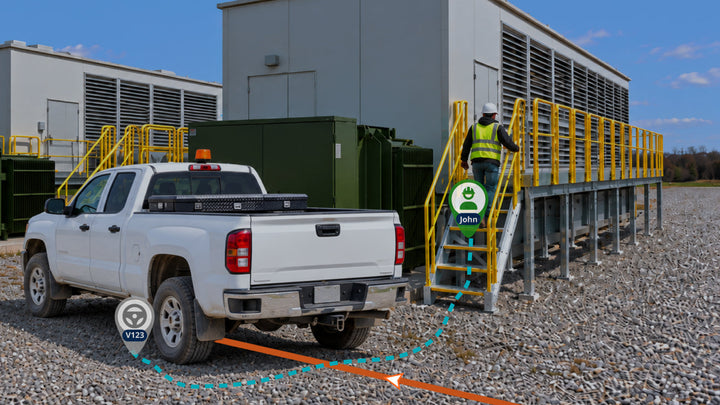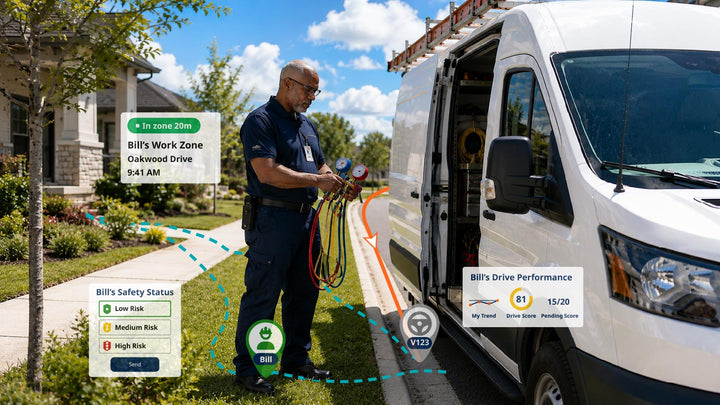


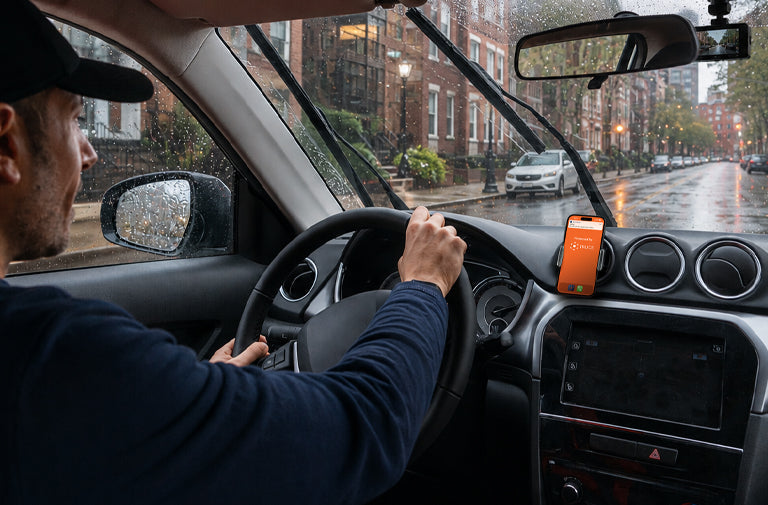
Telematics and fleet management platforms like Samsara, Motive, and Verizon Connect are built to detect and record distracted driving, not prevent it. But underwriters now treat documented prevention as a requirement to quote commercial auto, and detection-only tools leave the device-entrustment gap wide open. Fleet safety software with contextual device blocking closes it by locking distracting apps the moment the vehicle moves, and fleets that pair this kind of engineering control with feedback see up to 60% fewer incidents and 86% lower accident-related costs (AXA XL).
Why is distracted driving the leading cause of preventable fleet accidents?
The phone is the most persistent risk factor in the cab. Distraction now shows up on roughly 36.5% of commercial fleet trips (about one in three), texting carries 23 times the crash-event risk, and the average adult on-screen attention span has collapsed from about two and a half minutes in 2004 to roughly 47 seconds today. Unlike weather or traffic, this risk is almost entirely preventable, which is exactly why it belongs at the top of your prevention strategy.
What's the difference between detecting distraction and preventing it?
Everything, as far as your carrier is concerned. In the NIOSH and OSHA hierarchy of controls, coaching and policy are administrative controls (the weakest tier), and dashcams are detection. They document distraction after it happens. An engineering control removes the hazard: it stops the driver from using the distracting app in the first place. Telematics and dashcams detect and record; they do not prevent. An inward-facing camera can even be worse than nothing in court, timestamping the exact behavior the company failed to stop.
Where do Samsara, Motive, and Verizon Connect fit, and where's the gap?
These platforms are strong at what they are designed for: GPS tracking, route optimization, ELD compliance, diagnostics, and video capture. They tell you what happened and where. What they are not built to do is prevent a driver from picking up a phone. That leaves a specific, measurable gap, the "double entrustment" a company creates when it hands an employee both a vehicle and a corporate device required for work. The device is the second dangerous instrument, and it is the one most fleets leave unmanaged. Dedicated fleet safety software runs alongside your telematics to close exactly that gap.
Why do underwriters now require prevention, not just detection?
Because distraction is the controllable severity driver they care about most, and severity is what is breaking the market: claim severity is up 64% since 2015 and the median commercial-vehicle nuclear verdict now runs around $36 million. Carriers have moved documented distraction controls from a discount lever to table stakes for renewal, and a single at-fault distraction claim can raise a small fleet's premium 30-100%. The upside is real too: fleets with strong telematics scores earn 15-30% premium reductions, and Louisiana's HB 549 (effective January 1, 2026) is the first state law requiring insurers to offer a dashcam-plus-telematics discount. Your carrier is now one of your most important stakeholders.
What does contextual mobile device management actually do?
-
Detects motion automatically. No button to press, no app to remember.
-
Blocks distracting apps in real time. Texting, social media, and games become inaccessible while the vehicle is moving.
-
Keeps business-critical tools live. Navigation and dispatch stay available, so drivers can do their jobs.
-
Restores full access when parked, across BYOD and company devices. And it documents enforcement for carriers and counsel.
This is the shift from asking to ensuring. TRUCE ENFORCE is built as exactly this kind of control. At Hulett Environmental (169 vehicles), it prevents more than 250 distractions per employee per month, roughly one every three miles, with zero false positives, after AI dashcams alone produced too many to manage. Pairing enforcement with coaching on scored events is what makes the behavior change stick.
What should a fleet safety software buyer's checklist include?
-
Does it prevent distraction automatically, or only report it? Detection is not prevention.
-
Is blocking contextual and automatic? It should activate on motion and deactivate when parked, with no driver action.
-
Does it preserve navigation and dispatch? A tool that blocks everything gets worked around.
-
Does it integrate with our telematics? It should complement Samsara, Motive, or Verizon Connect, not replace them.
-
Does it enforce across BYOD and company devices? Mixed environments are the norm.
-
Does it document enforcement for carriers and counsel? This is what answers the underwriting question.
-
Is there third-party evidence and sustainable adoption? Ask for named results, not testimonials.
FAQ
What is the best fleet safety software for stopping distracted driving? The most effective option uses contextual mobile device management to automatically block distracting apps while the vehicle is in motion and restore access when parked, while documenting enforcement for insurers, rather than only coaching drivers after an event.
Does fleet safety software replace telematics like Samsara or Motive? No. Telematics handles GPS, diagnostics, and event capture but documents distraction rather than preventing it. Contextual device blocking runs alongside those platforms to close the driver-behavior gap.
Why do insurers care whether we prevent distraction? Distraction is the severity driver behind rising commercial-auto losses. Carriers now treat documented prevention as a requirement to quote, and reward strong telematics scores with 15-30% premium reductions.
How much can prevention reduce accidents and costs? Fleets pairing distraction prevention with dashcam feedback report up to 60% fewer incidents and 86% lower accident-related costs (AXA XL).
See the full data. Download the 2026 field guide, The Auto Liability Squeeze, for the underwriting picture and the 12-month framework.
Ready to improve driver safety?
See how TRUCE helps organizations reduce distracted driving, improve driver performance, and build a safer, more accountable mobile workforce.
Talk to an Expert